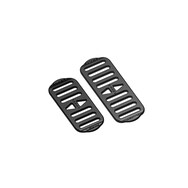
Lezyne · Mounting Rubber for Laser, Radar and Strip Drive
- 4,70 €
- 4,95 € RRP
Lezyne · Mounting Rubber for Laser, Radar and Strip Drive
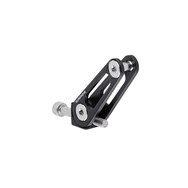
Supernova · Multimount CS Lamp Holder
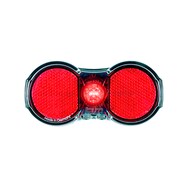
B + M · Toplight Flat Plus Dynamo-Powered Rear Light
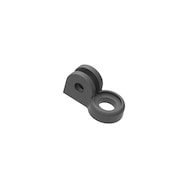
Lezyne · GoPro LED Adapter
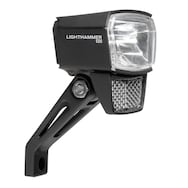
Trelock · LS 800 Lighthammer E-Bike Headlight
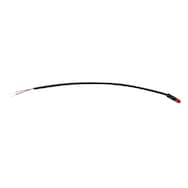
Supernova · Rear Light Connection Cable for Bosch Smart System
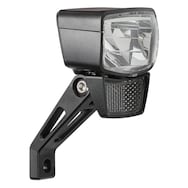
AXA · NXT 60 Dynamo LED Front Light
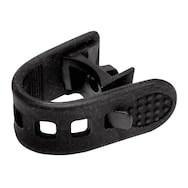
Trelock · ZL 740 Seat Post Mount for Vector Line Rear Lights
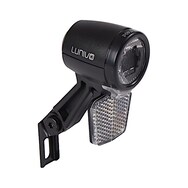
Lunivo · DIA F40 D Daylight Dynamo Front Light
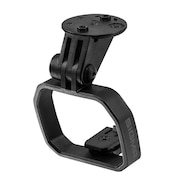
Sigma · AURA OUT FRONT MOUNT Bracket / GoPro Adapter
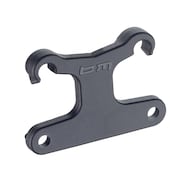
B + M · tail light holder for the saddle
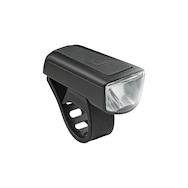
AXA · DWN 30 Front Light
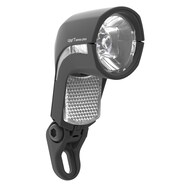
B + M · Lumotec Upp T senso plus 30 lux front light
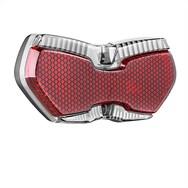
B + M · Toplight View Plus Dynamo Powered Rear Light
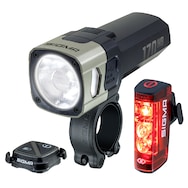
Sigma · AURA 170 HB LINK Front Light + HIRO 50 LINK Rear Light Rechargeable Lighting Set
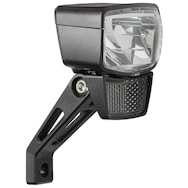
AXA · NXT 80 E-Bike LED Front Light 80 Lux
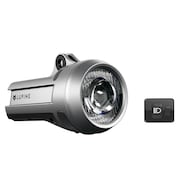
Lupine · SL Grano F Silver Edition Rechargeable Front Light with High Beam and Daytime Running Light
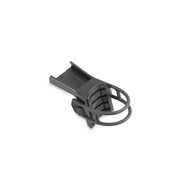
Lupine · C14 Mag StVZO Seat Post Holder
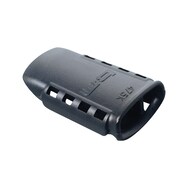
B + M · Cable Clip
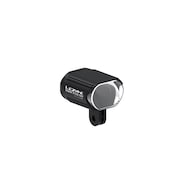
Lezyne · Power StVZO E500+ E-bike Front Light for Bosch Smart System
To ensure that you as a cyclist have good visibility while riding and are easy to spot by other road users, you need lighting for your bike. In many countries, the design of bicycle lighting is regulated by law, such as in Germany through the Road Traffic Licensing Regulations (StVZO): these dictate that front and rear lights and various reflectors are mandatory. However, there is a wide range of effective bike lighting options. In addition to many useful features, your bike can also be equipped with a high beam and brake light. Battery-powered or battery-operated lighting systems are also permitted in Germany. How do you choose the best lighting for your bike from the many options? Which lighting technology suits your bike and you? And what do lux and lumen values mean?
Did you know that there are active and passive elements for bicycle lighting? Active elements include front and rear lamps that generate their own light and are powered by a rechargeable battery, batteries or a dynamo. Passive elements include reflectors, which do not need a power supply because they reflect back light that strikes them.
Front headlights emit white light in front of the bicycle. Manufacturers use either a conventional incandescent lamp, one or more LEDs, or a halogen lamp as the light source. There is also often an integrated parking light that provides your bike with light even when stationary.
In addition to the front headlight, bicycles in Germany must be equipped with at least one rear red light, according to § 67 of the StVZO. The rear light is powered by dynamo, rechargeable battery, or battery. The lights must be mounted at least 25 centimetres above the ground. With the SON seatpost rear light, the high-power LED light is fanned out laterally onto two grooved profiles, for example. With these two light sources next to each other, the traffic behind you can better assess the distance visually – a significant contribution to your safety. Of course, you can also buy sets of headlights and reflectors. Examples include the lightweight Sigma Sportster/Mono RL lighting set with long battery life and two brightness levels or the Busch+Müller Ixon Core / Ixxi Dioden-Rücklicht set with aluminium housing at the front and a seat post light at the back.
Also, a brake light function is permitted in Germany. For example, the Busch+Müller Toplight Line Brake Plus detects braking manoeuvres via the hub dynamo and indicates them to other road users. When cycling off-road you can also optimise your bike lighting with an additional LED headlamp on the helmet. With the Sigma Buster 700 HL, for example, you can ensure ideal cornering light.
It still exists – the classic dynamo that is powered by the rotation of the wheel. Modern hub dynamos, e.g. from Shimano, now deliver energy with much less resistance, so you don't have to pedal as hard. Dynamos have some advantages:
Are you more of an athletic cyclist? Then you will probably love lights with a rechargeable battery pack or batteries. The advantages:
As you can see, each system has its advantages. The decision therefore depends heavily on how you plan to use your bike.
Lights approved for road use offer between 15 and 150 lux, lights for off-road use often more. The minimum value required by German law is 10 lux – but this is more about "being seen" than about being able to see at night. By the way, you can recognise all lights approved according to the StVZO by a K with a wave symbol on the housing.
Especially with more powerful lights, manufacturers tend to state the lumen value. But what do lux and lumen mean? The unit lumen (lm) describes the visible luminous flux and thus represents how much light is emitted in all directions. The lumen value helps you to estimate the brightness of a lamp: the higher the value, the more light a lamp emits. The unit of measurement lux (lx), on the other hand, refers to illuminance. It describes the amount of light (measured in lumens) cast on a given surface.
Neither lux nor lumens say anything about how much light your bicycle lamp actually provides. The design of the lamp and reflector is also important because it determines the light distribution. Some questions to consider:
You can usually find illustrations of the light fields on the manufacturer’s product pages.
By the way, bright hotspots in the light field are rather disadvantageous: The eye focuses on those hotspots, so it can’t perceive the areas outside of them as well.
The high beam, which has been approved in Germany since 2017, offers you extra safety on pedelecs and bicycles up to 25 km/h. This will make you much more confident in the dark. The high beam shines far ahead above the area that standard lights are supposed to cover. It also helps you to recognise obstacles such as hanging branches in good time. But be careful: As with a car, you must dim the high beam in oncoming traffic and in urban areas.
The "IQ-XM", for example, is a front headlight with a high beam from Busch+Müller. Use the handlebar button to switch between high beam mode with an additional 120 lux and low beam mode for a standard light with 80 lux. The manufacturer will indicate which lights are suitable for which e-bike motor and battery system in the product details.
Reflectors complement your bike lighting: a white front reflector on the headlight and a large red reflector at the rear. You have a choice with the wheels – either use tyres with a reflective stripe along the sidewall or the classic two yellow spoke reflectors on each wheel. Reflective spoke clips are also an option, such as the 3M Sekuclip Compact spoke reflectors. Here, German law is very specific: every single spoke must have such a clip. Finally, you must also attach yellow reflectors to the pedals.
One thing is clear: with so many choices, improved safety, bright lights and high-tech ideas, there are no excuses for inadequate bicycle lighting. "See and be seen" is the number one rule. In conclusion, here are some important aspects that will help you choose the best lighting for your bike: